Mattress literacy · Materials and comfort
How to Evaluate Materials and Firmness in an Obasan Mattress
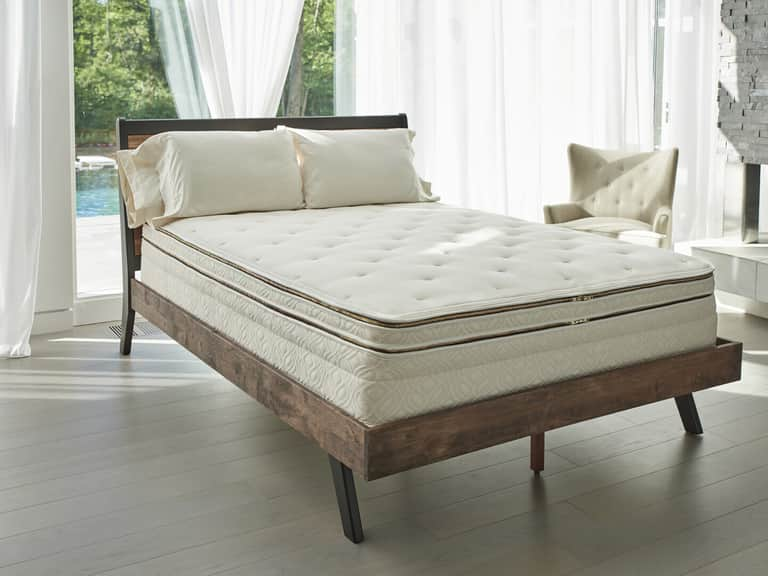
A mattress is a layered landscape: the cover, comfort materials, and support structure each shape how it feels and how it performs. When evaluating an Obasan mattress—or any organic latex mattress—look past broad labels. Learn what the layers are made of, how firmness is defined, and whether the complete construction makes sense for your body, sleep position, and preferences.
Published November 18, 2026
Start with the whole construction, not a single claim
Terms such as “organic,” “natural latex,” and “supportive” can be useful starting points, but they do not explain a mattress by themselves. Two beds may share a material name and still feel quite different. Their layers may vary in thickness, density, firmness, arrangement, and the way they work together. A cover can change the first impression; a comfort layer can affect pressure relief; deeper layers can influence how the body is supported.
That is why it helps to treat a mattress as a system. Ask what is inside, where each material sits, and what job it is intended to do. If you are researching an Obasan mattress, check the specifications for the exact model and size you are considering. Names and product lines can cover different constructions, so avoid assuming that one model’s materials or firmness options apply to every mattress from the same maker.
Look for a layer-by-layer description rather than a general statement about “natural materials.” A useful specification identifies the cover fabric, the type of latex, the thickness of each layer, and any other materials in the build. If details are missing, ask the manufacturer or retailer for them. Clear answers make it easier to compare beds fairly and to understand what you are choosing.
Read the material story carefully
What does “latex” mean here?
Latex is a broad material category, not a complete description of a mattress. When a specification says “natural latex,” find out whether it identifies the latex as natural, synthetic, or a blend. Ask how the material was processed and whether the description applies to every latex layer or only one part of the mattress. These details matter for understanding the product, even if they do not predict comfort on their own.
You may also encounter terms such as Dunlop and Talalay. They refer to different manufacturing processes for latex, and they can be associated with differences in feel and structure. Neither term alone tells you whether a mattress will suit you. The finished layer’s firmness, thickness, and position in the mattress matter too. If a maker uses one of these terms, look for an explanation tied to the specific model rather than relying on the label as a shortcut for quality.
Separate material content from certification
Certifications can help clarify which standards a product or material has been assessed against. Still, one certification does not automatically describe every feature of a finished mattress, and it is not a guarantee that a bed will feel comfortable to every sleeper. Check the certificate’s scope: does it cover the latex, the textile, a component, or the complete product? Confirm that the name on the documentation corresponds to the mattress you are considering.
Be precise with environmental and health-related language. “Organic,” “natural,” and “low-emission” are not interchangeable terms. When a claim matters to your decision, look for the specific standard and supporting documentation, and ask which materials it covers. A careful buyer can value certified materials while still examining firmness, durability information, care instructions, and return terms separately.
Notice the cover and any other layers
The cover is the first surface your body meets. Its fabric, quilting, and flexibility may change how the mattress feels at first contact and how readily the upper layers respond. A quilted or padded cover, for example, can create a different initial sensation from a thinner, more closely fitted cover. Ask whether the cover is removable, whether it can be cleaned, and what care methods the maker permits. Do not assume that a zippered cover is intended to be washed or removed for routine care.
Also note any wool, cotton, or other materials listed alongside latex. Find out where they appear in the construction and whether they form a thin surface layer or a larger part of the build. Natural fibers can contribute to the overall character of a bed, but material names alone do not establish temperature performance, allergy suitability, or ease of care. If you have a known sensitivity, consult the full materials information and, where appropriate, a healthcare professional.
Firmness is a personal experience, not a universal scale
Firmness descriptions—soft, medium, firm, or extra firm—are useful shorthand, but they are not perfectly standardized across brands. One maker’s medium may not feel like another’s. Even within a single mattress, the same bed can feel different to people with different body shapes, weights, sleeping positions, and comfort preferences. The surface can also feel unlike what you expect when the mattress is placed on a different foundation or paired with a thick topper.
Separate firmness from support. Firmness describes the initial impression and resistance you feel at the surface. Support refers more broadly to how the mattress helps keep your body comfortably aligned. A very firm bed is not automatically more supportive, and a softer bed is not automatically unsupportive. The right balance is the one that lets you rest comfortably without a persistent sense of excessive pressure or sagging.
For an Obasan mattress, review the available firmness choices for the exact model and size. If the maker offers customization or different configurations, find out precisely what can be selected and whether those choices are available in your preferred size. Confirm how a firmness option is defined, whether it applies to the whole mattress or an individual layer, and what can be changed after delivery. Do not infer that a particular option is right for you simply because it suits a certain sleep position.
Use your sleeping position as a guide, not a rule
Sleep position can help you think about pressure and alignment, but it cannot select a mattress on its own. Side sleepers often pay close attention to pressure at the shoulders and hips. Back sleepers may focus on whether the surface feels balanced beneath the lower back and pelvis. Stomach sleepers may want to notice whether the middle of the body feels excessively low. People who change positions during the night should consider whether the mattress feels comfortable across more than one posture.
These are questions to explore rather than prescriptions. Body proportions, mobility, individual sensitivities, and personal preference all affect what feels comfortable. If possible, test the mattress in the position you usually sleep in and give yourself enough time to notice more than the first few seconds of contact. Pay attention to whether you can settle naturally, whether you feel pressure building, and whether changing position feels easy.
If you share a bed, consider both sleepers. A firmness that feels comfortable to one person may not work equally well for another. Ask whether the mattress can be configured to accommodate differing preferences, and confirm exactly how that arrangement works. Where adjustments are not available, discuss the trade-offs together rather than assuming that a broad “universal comfort” description will fit both people.
A practical way to compare firmness
Make your comparison as consistent as possible. Test mattresses on their intended or recommended support, use a similar pillow, and lie down in your normal sleep positions. If you are comparing an Obasan mattress with another organic latex mattress, record the model names and construction details. Memory is an unreliable measuring tool after several showroom visits; short notes help preserve what you actually noticed.
- Check the surface: Does it feel inviting, or do you notice immediate pressure at a shoulder, hip, or other contact point?
- Check your posture: In your usual position, does your body feel relaxed and reasonably balanced, or do you sense that one area is dipping or being pushed upward?
- Change positions: If you move during the night, see whether repositioning feels comfortable and manageable.
- Allow time: A brief touch or a quick sit on the edge cannot reproduce a night of sleep. If a home trial is available, read its conditions before relying on it.
- Compare like with like: Note the foundation, mattress height, toppers, and bedding, since these can change the overall experience.
Some mattresses may feel different after a period of use as materials settle into their normal behavior. Ask the seller whether a break-in period is expected and how to distinguish ordinary adjustment from a comfort problem. Keep expectations realistic: a mattress cannot be judged solely by its advertised firmness or by someone else’s review.
The foundation and bedding belong in the evaluation
A mattress does not perform in isolation. Its foundation affects how evenly it is supported, and the manufacturer’s requirements may specify what kind of base is suitable. Check spacing, center support, and any other requirements in the care or setup documentation. A foundation that is incompatible with the mattress can affect its feel and may have implications for warranty coverage.
Bedding also shapes the sleep surface. A thick mattress pad or topper can soften the first impression and make it harder to judge the mattress beneath. A protector may add a slight change in texture or warmth, depending on its construction. When assessing firmness, use the bedding you expect to sleep with, but also try to understand how much of the sensation comes from the mattress itself.
Measure the bed and the surrounding room before delivery. Mattress thickness can affect how a bed sits on its frame, the height of the sleeping surface, fitted-sheet fit, and access to the top. Confirm dimensions and setup needs directly from the specifications for the model you are buying. These practical details are easy to overlook when attention is fixed on materials and firmness, yet they influence daily use.
Questions to ask before choosing
A short conversation with a retailer or manufacturer can fill gaps that a product page leaves open. Ask for clear, model-specific answers, and save the written specifications so you can compare them later.
- What are the materials in each layer, from the cover down to the support core?
- Is the latex natural, synthetic, or blended, and does that description apply to every latex layer?
- How thick is each layer, and what role is it intended to serve?
- What firmness options are available for this exact model and size?
- How does the maker describe or measure those firmness options?
- Can two sides of a shared mattress be configured differently, if that feature is offered?
- What foundation does the mattress require, and are there restrictions on adjustable bases?
- How should the mattress and cover be cared for? Which parts should not be washed or removed?
- What are the trial, exchange, return, delivery, and warranty terms, including any conditions or fees?
- What documentation supports any certification or material claim that is important to me?
Do not treat a long warranty or generous trial as a substitute for reading the details. Check what is covered, which conditions apply, and what the process involves. These policies vary, and a phrase such as “comfort trial” may have specific requirements. Knowing the terms before purchase can prevent unwelcome surprises if the mattress does not suit you.
A simple comparison checklist
When comparing an Obasan mattress with another option, keep the following points together. The goal is not to identify the mattress with the most impressive-sounding description; it is to find the construction and feel that meet your needs with information you can verify.
- Materials: Are the components identified clearly and specifically?
- Layer design: Do you understand the order, thickness, and stated purpose of the layers?
- Firmness: Are the available choices explained, and can you try or evaluate them under meaningful conditions?
- Fit: Does the feel work for your sleep positions, body, and any shared-bed preferences?
- Compatibility: Is your foundation suitable, and will your protector, sheets, and other bedding fit?
- Care: Are cleaning and maintenance instructions realistic for your household?
- Practical terms: Do the delivery, trial, exchange, return, and warranty conditions make sense to you?
- Evidence: Can you confirm important material and certification claims from relevant documentation?
Common mistakes to avoid
One common mistake is equating a natural or organic material with a particular comfort level. Material origin does not tell you whether a mattress is soft, firm, pressure-relieving, or right for your body. Another is choosing firmness by sleep position alone. Position can suggest what to examine, but individual experience is the deciding factor.
It is also easy to compare product names instead of actual constructions. If two mattresses both use latex, that does not mean they contain the same type, amount, or arrangement of latex. Compare itemized specifications wherever possible. Likewise, do not assume that a certification applies to the complete mattress unless its scope says so.
Finally, avoid judging a mattress only by its first impression or by a borrowed description such as “medium-firm.” A brief test, an online rating, or a friend’s preference can offer context, but none can predict your experience with certainty. Use specific questions, consistent testing, and the seller’s written terms to make a more grounded choice.
Frequently asked questions
Is a natural latex mattress always firm?
No. Firmness depends on the mattress construction and its configuration, not simply on whether latex is natural. Layer thickness, processing, cover design, and the other components can all influence the feel. Check the exact model’s specifications and, when possible, test the firmness option you are considering.
Does an organic label tell me how a mattress will feel?
No. An organic claim concerns material or production standards within a defined scope; it does not determine comfort. Ask what the claim covers and evaluate firmness, support, construction, care, and fit separately.
Can I choose a mattress firmness based only on my sleep position?
Sleep position is a useful starting point, not a complete answer. Body proportions, personal comfort, pressure sensitivity, and whether you change positions matter too. Use your position to guide what you notice while testing, then base your decision on how the mattress feels to you.
What should I do if the product description does not list every layer?
Ask the manufacturer or retailer for a complete, model-specific materials breakdown. Request the type and thickness of each layer, the cover details, and information about any certifications you want to verify. If the information remains unclear, you may find it difficult to make a fair comparison.
Will a mattress topper correct the wrong firmness?
A topper can change the surface feel, but it may not resolve every mismatch in support or comfort. It can also make it harder to assess the underlying mattress. Before relying on one, check the mattress maker’s guidance, the topper’s materials and thickness, and any relevant trial or return conditions.
Make the decision with clear eyes
Evaluating an Obasan mattress is less about finding a single perfect label than understanding what is beneath the surface. Read the material list layer by layer. Check the scope of certifications rather than treating them as a complete verdict. Compare firmness options in the context of your own body, sleeping position, and bedding. And make sure the foundation, care instructions, and purchase terms are part of the decision.
A well-informed comparison is practical, not complicated. Write down what you need, ask questions the specifications do not answer, and give your own comfort more weight than broad promises. When materials, construction, and firmness are considered together, you can judge whether a mattress is a sensible match for the way you sleep.