Mattress literacy · Comfort and materials
How a Natural Latex Topper Changes an Organic Mattress
A mattress is more than its visible surface. Beneath the sheet, layers of foam, fibers, and springs work together to hold the body and shape the feel of a night’s rest. A natural latex topper adds another layer to that system—one that can soften a firm surface, change how pressure is distributed, and make an organic mattress feel noticeably different without replacing it.
Published November 2, 2026
Think of a mattress as a small landscape of materials. The support core is its foundation; the comfort layers are the terrain the body encounters first. A topper changes that terrain. Made from natural latex, it can introduce a springy, cushioning layer between the sleeper and the mattress underneath. The effect is not determined by latex alone. Thickness, firmness, construction, and the condition of the mattress below all help decide what the sleeper feels.
For someone whose organic mattress is sound but feels too firm at the surface, a latex topper may offer a practical adjustment. It can add some give and help cushion areas that press more heavily into the bed. But a topper is not a repair for a mattress that sags or lacks adequate support. It changes the surface; it cannot rebuild a failing foundation.
That distinction is the starting point for choosing well. The best result comes from understanding what the mattress already does, identifying what feels wrong, and then selecting a topper to address that specific comfort issue.
What a latex topper adds
Latex is valued in sleep products for its resilient, responsive feel. When pressure is applied, the material compresses and then pushes back rather than remaining deeply indented. On a mattress, this can create a sensation that is both cushioned and buoyant: the surface yields, but movement does not feel as slow or enveloping as it may on some other foams.
A topper made with natural latex adds this response above the mattress’s existing comfort and support layers. Depending on its thickness and firmness, it may make the sleep surface feel plusher, distribute pressure differently, or alter how readily the sleeper settles into the mattress. It does not change the mattress’s internal construction, and it cannot make every bed suitable for every body. It is best understood as a surface adjustment rather than a transformation of the bed’s support system.
Organic describes a production or certification standard for particular materials; it does not, by itself, describe how soft or supportive a mattress feels. An organic mattress may contain latex, cotton, wool, coils, or combinations of these materials. A topper’s compatibility depends on its physical feel and construction, not simply on the word “organic” appearing on both labels.
It is also useful to distinguish a latex topper from a topper that combines latex with other materials. Wool, for example, can add a different kind of cushioning and help manage moisture and temperature at the surface. A layered product may feel unlike a single-material latex slab, even if latex is one of its main components. Read the construction details carefully rather than relying on a broad material name.
Thickness: how much change is enough?
Thickness is one of the clearest clues to how strongly a topper may influence the bed’s feel. A thinner layer usually makes a more modest adjustment, preserving more of the mattress’s original character. A thicker layer can create a more noticeable separation between the sleeper and the mattress beneath, adding greater opportunity for cushioning—but it also changes the overall height and feel of the sleep system more substantially.
There is no universal thickness that works best. The right choice depends on the mattress, the sleeper, and the nature of the discomfort. If the mattress feels generally supportive but slightly too firm at the surface, a relatively modest layer may be enough. If it feels uncomfortably hard in pressure-sensitive areas, a thicker topper may provide more cushioning, though the result still depends on firmness and how the underlying bed responds.
More material is not automatically better. A thick, soft layer can alter the way the body settles into the bed and may feel less stable to some sleepers. It may also raise the sleeping surface enough to affect fitted-sheet depth, bed-edge access, or the proportions of the bed. Measure the mattress and check the topper’s finished profile before deciding.
Think of thickness as a volume control, not a guarantee. It influences how much the topper contributes, but it cannot predict the precise comfort result on its own. A thin firm topper and a thicker softer topper may each change the surface in different ways. Firmness and the mattress beneath remain part of the equation.
Firmness and the mattress beneath
Firmness describes the initial resistance a sleeper notices when lying down. It is not the same as support, which concerns how well the sleep system holds the body in a comfortable, stable position. A surface may feel soft while still being supportive, or feel firm without being suitable for a particular sleeper. These sensations are personal and can vary with body shape, sleeping position, and the mattress’s design.
When selecting a latex topper, consider how its firmness will interact with the mattress. A softer topper may introduce more surface cushioning over a firm bed. A firmer topper may add a responsive layer without making the surface as plush. Neither choice can be judged in isolation: the combined feel is produced by the topper and the mattress acting together.
Sleep position can offer a useful starting point. Side sleepers often notice pressure around the shoulders and hips, where the body meets the mattress more directly. They may look for enough surface give to cushion those areas while preserving comfortable support. Back sleepers may prefer a balance of cushioning and resistance. Stomach sleepers often need to be especially attentive to how much the body sinks, since a surface that feels too yielding may not suit their preferences.
These are broad considerations, not rules. People of similar height or sleeping position can prefer very different surfaces. If possible, test the mattress and topper combination under realistic conditions. A brief showroom impression can help, but it may not reveal how the bed feels after hours of sleep. Check return and trial terms before purchasing, particularly when the topper is intended to solve a specific comfort problem.
When a topper can—and cannot—help
A topper is most useful when the mattress is in good structural condition and the main concern is surface comfort. If a bed feels too firm, or if its existing comfort layer no longer provides the desired cushion while the support core remains sound, a topper may offer a lower-impact way to adjust the feel. It can be especially relevant when replacing the entire mattress is not practical or necessary.
Before adding a layer, inspect the mattress. Look for visible dips, uneven areas, damaged seams, unusual noise, or a noticeable loss of support. Rotate the mattress only if the manufacturer recommends it; many mattresses are designed for a particular orientation and should not be flipped. Check the foundation as well, because an unsuitable or damaged base can affect how the mattress performs.
A topper will follow the shape of what lies beneath it. If the mattress has a deep hollow, adding cushioning on top may not make the surface even or restore reliable support. In that case, the underlying problem needs attention. A topper may temporarily disguise a symptom while leaving the cause in place.
It is also not a substitute for medical care. Persistent pain, numbness, or disrupted sleep can have causes that a bedding adjustment cannot address. A mattress decision may be one part of a broader effort to improve comfort, but it should not be treated as a diagnosis or a guaranteed remedy.
Material compatibility and everyday use
Natural latex can be used alongside a range of mattress materials, but the complete arrangement matters. Consider the cover fabric, the topper’s core, any wool or fiber layers, and the mattress’s own construction. The result is a system of layers with different properties, rather than a single material acting alone.
Check the topper’s care instructions before using it. Some models are designed for spot cleaning only; others may have a removable, washable cover. Latex itself is generally not treated like ordinary laundry, and exposure to direct heat or sunlight may be discouraged by manufacturers. A washable cover or mattress protector can help shield the sleep surface from everyday spills and perspiration, but it should fit without creating unwanted tension or bunching.
Fit matters, too. A topper should sit securely on the mattress, with corners and edges aligned. Straps, if included, can help limit shifting. Deep-pocket sheets may be needed when the added layer raises the total mattress height. After setup, check that the protector and fitted sheet lie smoothly rather than pulling the topper out of place.
People sensitive to natural rubber should review product materials and manufacturer guidance before use. Material descriptions and certifications can help clarify what a product contains, but they are not a substitute for individual health advice where sensitivities are a concern. Ask the manufacturer for specific information if a label or product description leaves an important question unanswered.
A practical way to choose
Rather than beginning with a product label or a promise of “better sleep,” start by describing the current problem as precisely as possible. Is the surface too firm everywhere, or only uncomfortable at the shoulders? Does the mattress feel supportive but not cushioned? Is there a dip that remains when nobody is lying down? Different problems call for different solutions.
- Assess the mattress first. Check for sagging, damage, and foundation issues. A topper is not a structural repair.
- Identify the desired change. Decide whether you want more surface softness, a more responsive feel, or a modest adjustment that retains the mattress’s character.
- Compare construction. Confirm whether the product is latex alone or combines latex with wool or another material, and note the thickness and stated firmness.
- Consider the whole bed. Account for sleeper position, sheet depth, mattress height, and how the topper will stay in place.
- Review care and trial details. Understand cleaning instructions, return conditions, and any limits that apply to the topper or mattress warranty.
Where available, choose a way to test the combined feel before committing. A retailer’s return policy, a clearly explained trial period, or the ability to compare materials in person can reduce uncertainty. Keep the mattress and topper in a consistent setup while evaluating them; changing sheets, pillows, or the foundation at the same time can make it harder to tell what caused a difference.
A natural latex option with a wool layer
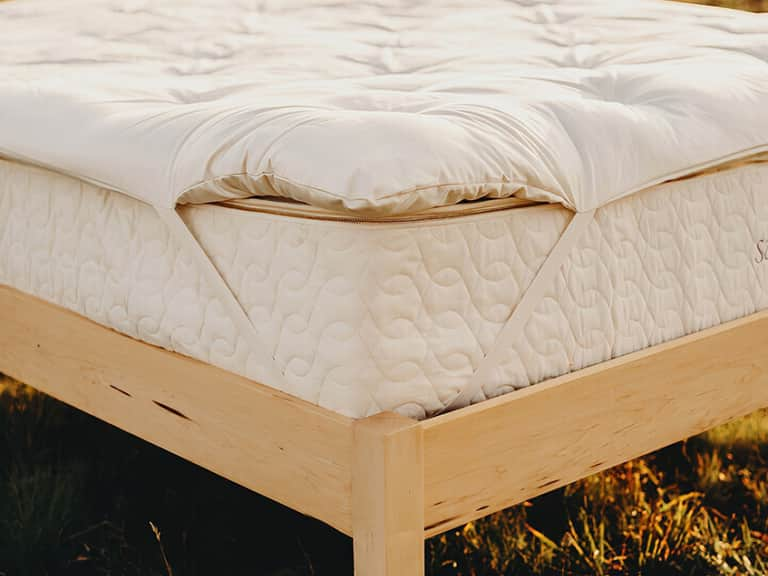
For shoppers considering a layered natural-material design rather than a latex-only surface, the Natural Wool & Latex Mattress Topper combines a two-inch GOLS-certified Dunlop latex core with a wool wrap and an organic cotton cover. Its listed overall depth is three inches. That construction may suit someone exploring both responsive latex and a wool layer, but its feel should be assessed as a combination rather than assumed to match a single-core latex topper.
Product specifications are a starting point, not a promise that a particular topper will suit every mattress or sleeper. Compare the materials and dimensions with your own bed, and confirm current care guidance and compatibility information with the manufacturer or retailer before purchase.
What changes—and what stays the same
Adding a natural latex topper changes the first layer the body encounters. Depending on thickness and firmness, the mattress may feel more cushioned, more responsive, or simply different enough to improve surface comfort. Yet the mattress beneath remains the central support structure. Its age, condition, materials, and design continue to shape the final result.
That is why a topper is best approached as a careful adjustment. Measure the bed, examine the mattress, define the comfort goal, and compare the topper’s actual construction with the surface you have now. Give the combination a fair evaluation, while remembering that an accessory cannot correct every problem or guarantee a particular sleep outcome.
In an organic mattress system, natural materials can be layered in many ways. The most useful choice is not necessarily the thickest or most elaborate one. It is the one whose feel, construction, care requirements, and compatibility make sense for the bed and the person sleeping on it.
Frequently asked questions
Will a latex topper make a firm mattress softer?
It may soften the surface feel, particularly when the mattress is structurally sound and the topper has a more yielding feel than the bed beneath. The degree of change depends on the topper’s thickness and firmness, as well as the mattress construction.
Can a topper fix a sagging organic mattress?
No. A topper can change surface comfort, but it cannot restore a sagging support core or repair a damaged mattress. Check the mattress and foundation before deciding whether an additional layer is appropriate.
Is a thicker topper always more comfortable?
No. Thickness influences how much the topper changes the bed, but comfort also depends on firmness, construction, and personal preference. A thicker layer may feel less stable to some sleepers and can raise the overall bed height.
Does “organic” tell me how a topper will feel?
No. Organic claims relate to particular materials or production standards, not a universal comfort level. Review the topper’s complete construction, dimensions, and firmness information to understand what it may add to your mattress.