Bedding • Materials & care
Wool Toppers Explained: Temperature Control, Feel, and Care
A wool topper adds a layer between sleeper and mattress: a soft landscape of fibers that can cushion the surface and help manage warmth and moisture. Its character depends on more than the word “wool” on a label. Thickness, fill, construction, and care instructions all shape how it feels—and how it holds up over time.
At night, the bed is a small climate system. Body heat gathers beneath covers; moisture moves into fabrics and fillings; the mattress beneath supplies most of the structural support. A topper changes the uppermost layer of that system. Wool is valued in bedding for its springy fibers and ability to absorb water vapor, but it is not a cooling switch, nor is every wool topper alike. The right choice depends on the surface you have, the feel you want, and the way you are prepared to care for it.
This guide looks closely at what a wool mattress topper can do, where its limits lie, and which details deserve attention before you buy, borrow, or add one to a guest bed. The aim is practical: understand the materials, anticipate the feel, and avoid care mistakes that can turn a useful layer into a difficult one.
What a wool topper is—and what it is not
A wool topper is a separate padded layer designed to rest on top of a mattress, usually beneath a fitted sheet. Depending on its construction, it may contain loose wool batting, wool enclosed in stitched channels, or wool combined with another material. Some products described as wool toppers use wool only in the outer cover or as one component of a layered design. Reading the materials list is therefore more useful than relying on the product name alone.
A topper can alter the first impression of a mattress. It may soften a surface, add a little cushioning, or make a firm bed feel less unyielding. It cannot reliably correct a mattress that sags, has lost support, or is otherwise damaged. Nor does a relatively thin layer change the mattress’s underlying structure in the way a different support core might. Think of it as an adjustment to the surface, not a repair to the bed beneath it.
That distinction matters when choosing between wool, foam, latex, and other fills. A thick foam layer may allow more body contouring; a latex topper typically feels buoyant and responsive. Wool tends to offer a more yielding, padded surface rather than a deep, enveloping cradle, although the exact impression depends on loft, density, and the mattress underneath. Personal descriptions such as “soft” and “firm” are not standardized across manufacturers, so specifications and return terms are worth checking.
How wool interacts with warmth and moisture
Wool fibers can take up moisture vapor while still feeling comparatively dry at the surface. In bedding, that capacity can contribute to a less clammy sensation for some sleepers. The fiber also traps air, helping it insulate when conditions are cool. Those two qualities—insulation and moisture management—may sound contradictory, but they help explain why wool is used in bedding across changing conditions.
The experience is not the same as active temperature control. A wool topper does not sense body heat and cool a room, and it cannot guarantee that a hot sleeper will sleep comfortably. Temperature depends on the full sleep environment: room conditions, blankets, nightwear, mattress materials, personal physiology, and how much heat escapes from the bed. A dense topper, a tightly woven cover, or heavy bedding can still feel warm, even when the filling is wool.
For someone who wakes feeling damp or dislikes the slick, close sensation of certain synthetic surfaces, wool’s moisture-handling properties may be appealing. For someone who runs hot, the question is not simply “Is wool cool?” but rather: How thick is the layer? How much wool is inside? What fabric covers it? Is the mattress itself breathable? What bedding is used above it? A lighter construction and breathable sheet may matter as much as the fiber choice.
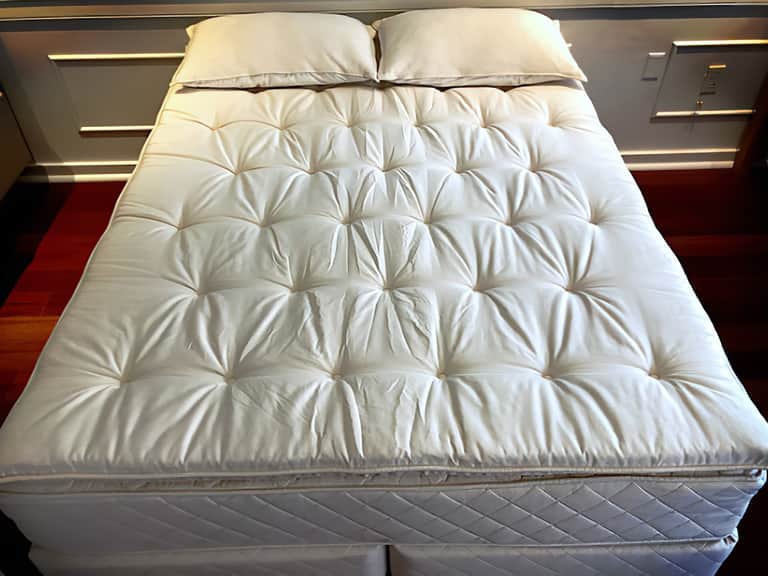
Airflow also depends on the topper’s design. Quilting can hold filling in place, while the spacing and depth of stitched channels affect how the layer settles and moves. A dense, heavily padded construction may not feel like a light wool pad, even if both list wool as the primary fill. Product descriptions that identify fill weight, dimensions, cover fabric, and quilting pattern offer a clearer picture than broad claims about natural comfort.
Feel: cushioning, loft, and the mattress beneath
The feel of a wool topper begins with its loft: the depth and resilience of the padded layer. A thinner topper generally makes a subtler change. A thicker one may add more cushioning, but thickness alone does not reveal how it will compress under the body. Fill amount, fiber preparation, quilting, and time in use all influence how much the layer gives.
Consider sleep position and pressure points as well as broad firmness preference. Side sleepers often notice pressure at the shoulders and hips; back sleepers may be more sensitive to how a surface supports the lower back; stomach sleepers can find that excess softness changes how the pelvis settles. These are starting points, not rules. Body shape, mattress condition, and personal comfort can shift the result considerably.
A topper also interacts with the feel of the base mattress. On a supportive but somewhat firm mattress, a modest wool layer might take the edge off the surface. On a deeply soft mattress, extra padding could make the bed feel less stable. If a mattress has a pronounced dip, a topper may follow that contour rather than level it out. Before adding one, check the mattress foundation, rotate the mattress if its instructions allow, and assess whether the underlying bed still provides even support.
Natural materials can have a noticeable scent when new, particularly after being enclosed in packaging. Aired in a clean, dry space according to the manufacturer’s directions, bedding may lose some initial odor. People sensitive to wool, animal fibers, or particular finishes should review the complete materials information and consider the return policy before opening or using the item.
Construction details worth comparing
The phrase “wool topper” covers a range of constructions. Use these details to compare like with like:
- Fiber content: Check whether the filling is entirely wool, a wool blend, or wool paired with latex or another material. Look separately at the cover fabric.
- Fill amount and thickness: A stated fill weight, when available, can help distinguish lightly padded layers from fuller ones. Confirm whether the listed thickness is measured before or after compression.
- Quilting and compartment design: Stitching can limit movement of the filling, but it also shapes the surface. Ask how the wool is held in place and whether the construction can be repaired or adjusted.
- Attachment and fit: Elastic straps, corner pockets, or a fitted skirt may help keep the topper in place. Match its dimensions to the mattress, including mattress depth if the design wraps around the sides.
- Cover and protector compatibility: A removable cover can simplify some aspects of routine care, but it does not mean the wool fill itself is washable. Confirm what can actually be removed and cleaned.
- Certifications and sourcing: If environmental or animal-welfare claims matter to you, verify what a named certification covers. A certification may apply to particular materials or production stages, not every component of a finished item.
Some beds combine wool with latex rather than using a wool-only topper. For example, the Naturally Organic Hudson Luxe Latex Mattress is described as having an organic wool-and-latex topper over a latex mattress core. It illustrates why checking construction matters: a layered product with wool and latex will not necessarily feel or behave like a standalone wool-filled topper. The materials work together, and the whole assembly—not one fiber in isolation—determines the surface experience.
Care: protect first, clean cautiously
Care requirements vary by product, and the label or manufacturer’s instructions should take precedence over general advice. Wool can shrink, felt, or lose its shape if washed or dried in ways that agitate, heat, or saturate the fibers. A topper that looks like a quilted pad may not be suitable for a household washing machine. “Natural” does not mean maintenance-free, and “removable cover” does not necessarily mean the complete topper can be laundered.
Begin with prevention. Use a fitted sheet and, if appropriate, a breathable mattress or topper protector that is compatible with the maker’s care directions. A protector can reduce exposure to skin oils, spills, and everyday soil. It may also change the feel or airflow of the bed, so choose one that fits securely and does not create unwanted heat or noise.
If the topper becomes damp, address the moisture promptly. Follow the care instructions and allow the item to dry thoroughly in a well-ventilated place before putting sheets back on. Avoid storing or covering a damp wool layer: trapped moisture can contribute to lingering odors and may encourage damage to bedding materials. Do not place it near direct heat or strong sunlight unless the manufacturer specifically permits that method.
For a small spill, blot rather than rub. Rubbing can drive liquid deeper or distort the surface. Use only the spot-cleaning method specified for the product; a detergent or stain treatment that is safe for a washable cotton sheet may not be suitable for wool batting. Test any approved cleaner on an inconspicuous area if the instructions recommend it, and avoid saturating the fill.
Airing can help refresh bedding between washes, but it is not a substitute for cleaning a serious spill or addressing a hygiene concern. If the cover is removable and washable, check its temperature, drying, and reassembly directions. Make sure every component is fully dry before rebuilding the topper. If the fill is spot-clean-only, a professional cleaner may or may not be appropriate; ask the manufacturer or a cleaner experienced with wool items before proceeding.
Using a wool topper on a guest or temporary bed
A topper can be useful when a guest mattress is structurally sound but feels a little firm. For a borrowed or temporary bed, however, comfort is only one part of the decision. Confirm that the topper is clean, completely dry, free from persistent odors, and in good condition. Ask how it has been stored and whether its cleaning history is known. A clean protector and fresh sheets provide a practical barrier, but they do not replace appropriate cleaning of a visibly soiled or damp layer.
For hosts, a topper that requires careful handling may not be the easiest option for frequent turnovers. Look at the time and facilities needed for airing, spot treatment, and drying—not just the initial comfort. A removable washable cover can make routine care more manageable, but only if the fill can remain protected and the cover can be laundered according to its instructions. Keep care directions accessible to anyone responsible for preparing the bed.
A temporary sleep surface also needs a suitable base. A topper should lie flat and remain secure on a stable mattress or other manufacturer-approved support. Do not use it to conceal a damaged bed, and do not assume that added padding will make an unsuitable surface safe or supportive. If the mattress is borrowed, rented, or supplied with a guest space, clarify who is responsible for cleaning and what products are permitted before making changes.
Common assumptions to reconsider
- “Wool always sleeps cool.” Wool can help manage moisture and insulate, but the result depends on the complete bedding system and the sleeper. It may not solve overheating.
- “A thicker topper is always more comfortable.” More loft can mean more cushioning, but it can also change support and make a soft mattress feel less stable.
- “Wool is naturally stain-proof.” No bedding layer should be treated as immune to spills. Protect it and follow product-specific cleaning guidance.
- “A removable cover means machine washable.” The cover and filling may have different care requirements. Check instructions for each component.
- “A topper fixes an old mattress.” It can adjust surface feel, but it cannot restore a failed support core or reliably correct sagging.
A practical decision checklist
Before choosing a wool mattress topper, work through a few questions:
- Is the mattress in good condition, with adequate underlying support?
- Do you want a small surface adjustment or a more noticeable change in cushioning?
- What are the topper’s exact fill materials, thickness, fill amount, and cover fabric?
- Does the design stay in place on your mattress, and do the dimensions fit?
- Are you comfortable with spot-cleaning or other care that may be more involved than machine washing?
- Is there a protector that suits the topper and your temperature preferences?
- Are the return, warranty, and cleaning terms clear before the item is used?
The bottom line
Wool toppers bring a distinctive combination of cushioning, resilience, and moisture-handling potential to a bed. Their comfort is not dictated by fiber alone: thickness, fill density, quilting, cover fabric, the mattress beneath, and the rest of the bedding all shape the result. For some sleepers, wool offers a breathable-feeling buffer that softens a surface without the deep contour of a thick foam layer. For others, a different material or no topper at all may be a better match.
The most dependable choice begins with realistic expectations and careful reading. Treat a topper as a surface layer, not a cure for a worn-out mattress. Compare construction rather than relying on broad claims, and follow care instructions closely—especially when the item is spot-clean-only. With the right fit and sensible protection, a wool topper can become a considered part of the bed’s climate and comfort, quietly doing its work beneath the sheets.
Frequently asked questions
Does a wool topper make a bed warmer?
Wool can insulate, but its moisture-handling properties may also help some people feel less clammy. Whether the bed feels warmer depends on the topper’s thickness and construction, the mattress, room conditions, and the bedding used above it.
Can a wool topper be washed?
Some covers may be washable, while the wool filling may require spot cleaning only. Check the care label for the specific item. Do not machine-wash or tumble-dry a topper unless its manufacturer explicitly says that is safe.
How often should I air a wool topper?
There is no universal schedule. Follow the manufacturer’s guidance, and air the topper when it needs refreshing, ensuring it stays dry and protected from conditions that could damage its materials. Airing does not replace cleaning after a spill.
Will a wool topper make a sagging mattress comfortable?
It may soften the immediate surface, but it generally cannot correct a sagging or failing mattress. Address the condition of the mattress and its support base before deciding whether a topper is an appropriate addition.